

In product development meetings, you'll often hear the terms 'Rice Flour' and 'Rice Starch' used as if they were interchangeable. They are not. Choosing the wrong one can mean a finished product that doesn't deliver the texture, viscosity, or label claim you intended. This guide is the side-by-side reference your formulators and procurement team need.
The Short Answer
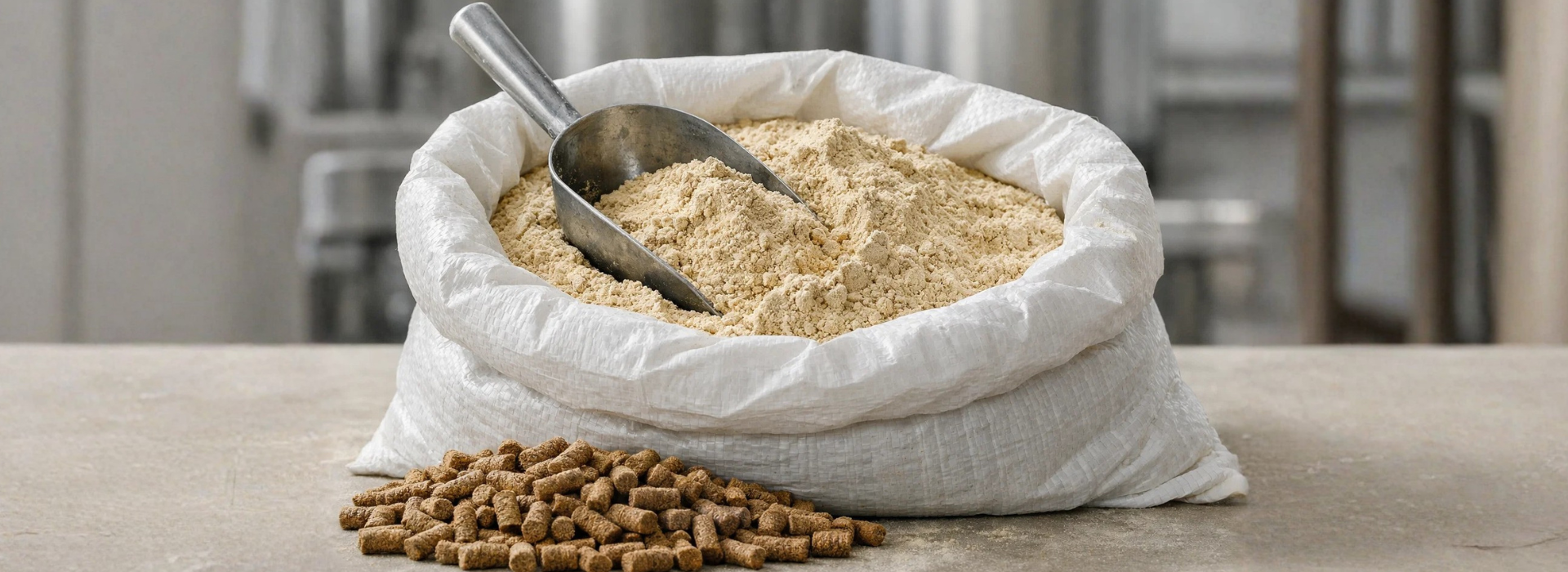
Rice Flour is the entire Rice grain milled into a powder - including bran (in Brown Rice Flour) or just the endosperm (in White Rice Flour). Rice Starch is the purified starchy fraction derived by wet milling process of the Rice grain, with most of the protein, fat, and bran removed.
Rice Flour is typically 80-90% starch, 6-9% protein, 0.5-1.2% fat, and contains all the natural minerals of the Rice grain. Rice Starch is 99%+ starch, with negligible protein and fat.
Side-by-Side Comparison
| Attribute | Rice Flour | Rice Starch |
|---|---|---|
| Composition | Whole grain (white or brown), milled fine | Refined - only the starch fraction |
| Starch Content | 80–90% | 99%+ |
| Protein | 6–9% (white) / 7–9% (brown) | <0.5% |
| Color | White to creamy (or beige for brown) | Bright white |
| Mouthfeel | Slightly grainy in finished product | Silky, glossy, glassy |
| Cost/Price | Lower (basic milling process) | Premium (refined process) |
| Best At | Bulk, structure, texture in baked goods, snacks, cereals | Thickening, gloss, freeze-thaw stability, clean-label modifiers |
| Label | "Rice Flour"; clean ingredient | "Rice Starch"; clean ingredient (native, non-GMO if specified) |
WHEN TO USE RICE FLOUR
Bulk and structural applications
Use Rice Flour when you need significant volume in a finished product; gluten-free baking, snack bars, breakfast cereals, infant cereals, coatings, batter systems, dusting flour, pet food kibble, and industrial bakery dough. Rice Flour brings carbohydrates, a small amount of protein, and the structural backbone the application needs.
Where Rice Flour shines
- Gluten-free flour blends (60-70% of the blend).
- Infant cereals (sole or primary ingredient).
- Extruded snacks where texture and crispness matter.
- Coatings (especially coarse grade for tempura and crispy fried foods).
- Pet food (binder and grain-inclusive carbohydrate).
- Pasta and noodles (with starch and gum complement).
WHEN TO USE RICE STARCH
Thickening and surface applications
Use Rice Starch when you need pure thickening, viscosity control, or surface gloss; sauces, gravies, soups, baby food purées, dairy desserts, instant beverages, and clean-label thickener replacements for modified corn or potato starch.
Where Rice Starch shines
- Clean-label thickener (replacing modified starches).
- Glossy fruit preparations and yogurts.
- Baby food purées (super-fine mouthfeel).
- Cosmetics and pharmaceutical excipients.
- Freeze-thaw-stable sauces and frozen entrées.
- Specific instant-soup or instant-noodle formulations.
COMMON FORMULATION MISTAKES
Mistake 1: Using Rice Flour where Rice Starch is needed
Symptom: thickener doesn't develop the gloss or smooth viscosity you wanted; finished product feels grainy on the tongue. Fix: switch to Rice Starch or use a 70/30 starch/flour blend for cost balance.
Mistake 2: Using Rice Starch where Rice Flour is needed
Symptom: gluten-free bread is gummy, spongy, and lacks structure. Fix: Rice Flour provides the protein and the bulk needed for structure; Rice Starch alone makes a gummy, low-volume bake.
Mistake 3: Buying the wrong particle size of Rice Flour
Symptom: gritty cookies, gummy crumb, or coatings that fall off. Fix: match grade/particle required for specific application.
PROCUREMENT: A QUICK CHECKLIST
- Define the role of the ingredient; bulk and structure (flour) or thickening and gloss (starch)?
- Confirm certifications. Require Organic, Non-GMO, Allergen-free, Kosher, Halal, etc.
- Confirm grade. Check particle size for flour and viscosity profile for starch.
- Request a 1 kg sample with CoA to test in pilot before bulk buying.
- Confirm logistics. FCL availability, lead time, packaging options.
BOTH, FROM ONE SUPPLIER
If your formulation calls for both Rice Flour and Rice Starch, working with a single supplier simplifies your supply chain dramatically. Matco Foods Limited supplies USDA NOP & EU Organic certified Rice Flour (Fine, Medium, and Coarse grades) and is a major producer of Rice-derived ingredients including Rice Maltodextrin, Rice Syrup, Rice Protein, and Rice Dextrose Monohydrate. One audit, one freight network, one set of organic and BRC documentation.
To request samples or a quote, visit www.matcofoods.com or email contact@matcofoods.com.